Media Literacy: What’s new?
Published: 28th August 2026
Updated: 7th October 2026
Published: 28th August 2026
Updated: 7th October 2026
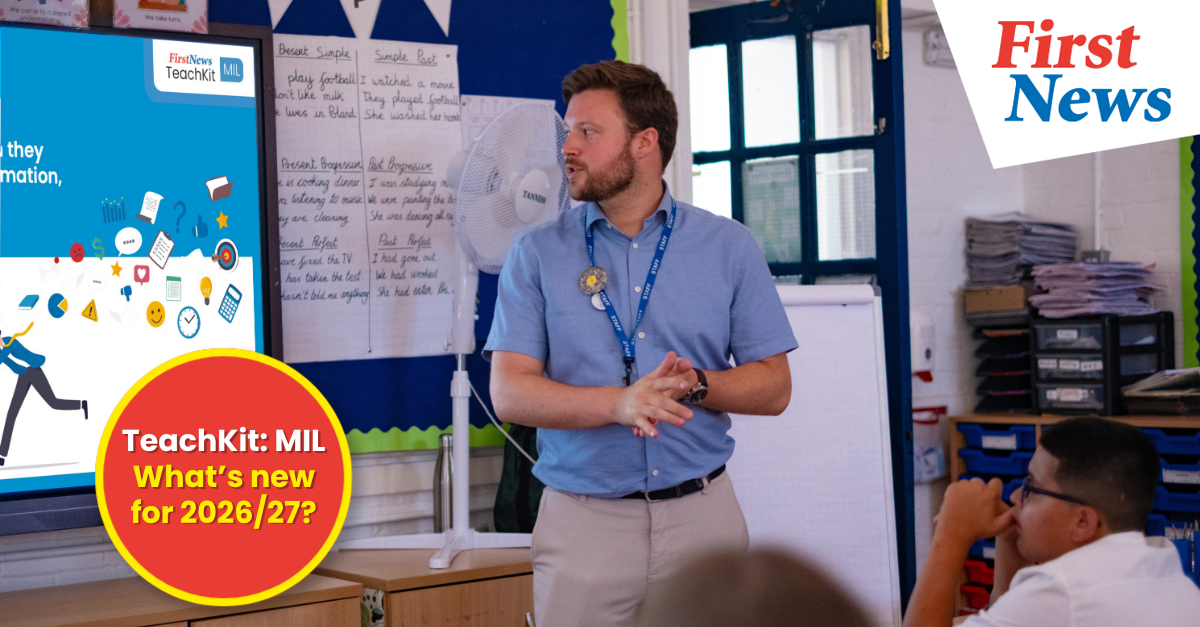
This year is shaping up to be our biggest yet. Our TeachKit: Media & Information Literacy, which launched in 2025, has expanded! Every news-based resource comes with three flexible ways to teach it. This covers KS2 and KS3, and now with an extension to years 10 and 11 (KS4).
Each topic comes as a Short Lesson (quick, discussion-based, ideal for tutor time or interventions), a Close Up Lesson (45–60 minutes, deeper analysis and activities), and an Assembly Pack (built for whole-year delivery, not just a shortened lesson).
Impact: Teachers can match the lesson to the time and setting they have, without losing the same core learning objectives. They can reuse formats for consolidation.
Our evergreen resources are a searchable “deeper learning” bank. It’s there for whenever teachers want to revisit a concept or go further on a topic.
Impact: Teachers get a ready reserve of quality material for extension, catch-up, or topics that need more time. It doesn’t add to their planning load.
Every level’s scheme of work builds in democratic processes, political systems, responsible activism and public debate.
Impact: Teachers can evidence citizenship and PSHE coverage of political literacy directly through their MIL teaching. Pupils become better prepared to engage critically with democratic life, especially relevant as the voting age lowers to 16.
Level 4 brings a dedicated scheme of work and news-led teaching packs, with bespoke content for older learners where needed.
Impact: Schools can now deliver MIL coherently from Year 7 right through to Year 11. This reaches the pupils who arguably need critical media skills most, with both preventative and remedial framing.
‘Information and media is more expansive and accessible than ever before. But with it comes opportunities for mis and disinformation. We owe it to our children and young people to give them the tools they need to navigate this fast moving area.
MIL is vital for Year 10 and 11, and we’re thrilled to share our Level 4 lesson packs that now match the challenge and depth these learners are ready for. We know, equally, that up to date, finger on the pulse news propels learning forward.
I’m thrilled to see the fruition of our team’s hard work, and can’t wait to see the impact in schools, and future generations.’
– Emily Hanson, Head of Education at First News
‘Even experienced adults are finding it increasingly harder to tell what’s real online and what’s fake, so children desperately need the information and tools that will help them to understand the fuzzy grey area between the two.
MIL is a set of skills that we’ve been teaching our readers for years, but we’ve now started writing bespoke stories on current hot topics to extend our MIL resources to older Level 4 students. We know that teachers are crying out for ways to teach these vital techniques to this age group, so these custom-made resources allow them to get ahead of the curve on MIL before it becomes compulsory on the curriculum.’
– Ian Eddy, Acting Editor of First News
‘Every lesson plan is thoughtfully put together, with guidance to help teachers navigate sensitive or ‘hot topic’ content with care.’
– Teachwire’s review of TeachKit: MIL. Read the full review.
Want to try TeachKit: MIL in your school? Begin your free trial today.
First News reaches millions of young readers every week, at home and at school. Our age-appropriate news stories and activities spark curiosity, build media and information literacy skills and empower children with the tools to navigate the world.