Explaining Scary News
Published: 3rd November 2023
Updated: 6th March 2026
Published: 3rd November 2023
Updated: 6th March 2026
The news can be scary, and your children may have questions about what’s going on and why. To help you navigate these discussions, our Acting Editor, Ian Eddy, shares a few tips to help your children understand events like war.

1. Don’t try to turn off the news when there is bad news. News reaches children in more ways than ever before. There are trusted, regulated news organisations working hard to report facts accurately, but there are also countless online videos, posts and influencers sharing opinion, speculation or even misinformation. Even if you limit news at home, children are likely to hear about events in the playground, see clips shared in group chats, or come across headlines and videos online. It’s better that they understand what’s really happening from a reliable source than piece together exaggerated or misleading versions.
2. Even if your child doesn’t mention bad news, don’t assume they are not troubled by it. They may be worrying quietly inside. Explain simply what has happened, taking care not to use sensationalised words that tend to be used by the national press. Let them voice their concerns too and have a conversation about it if they’d like to.
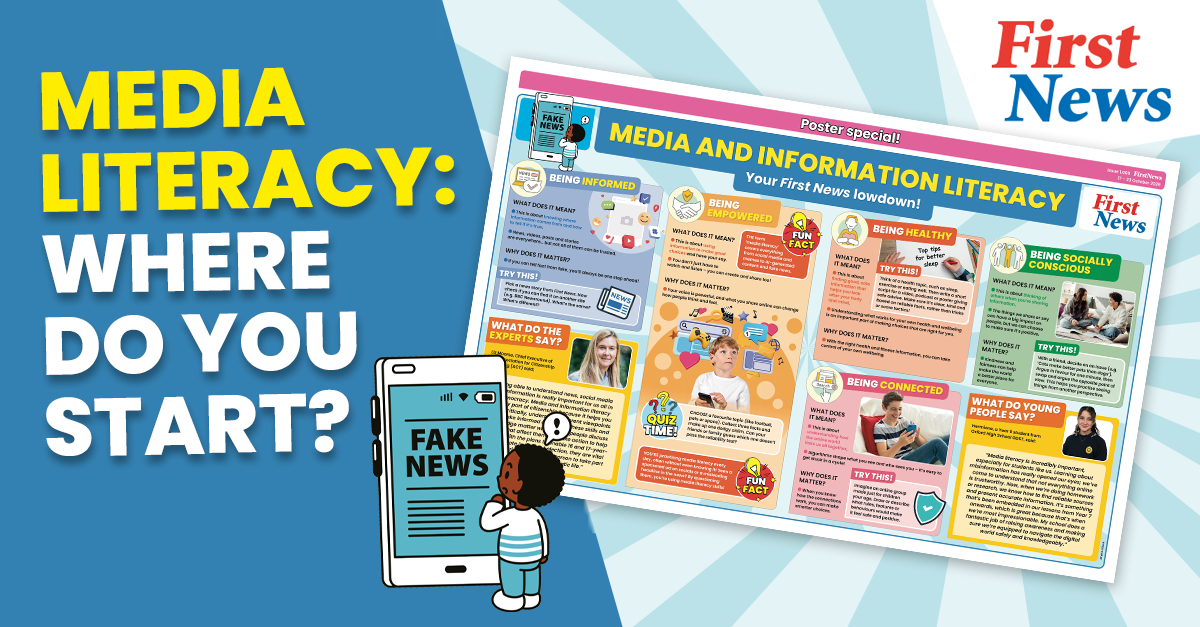
3. Use child-friendly news sources, like First News. We explain complex events clearly, calmly and without sensationalism. Our content, designed especially for children, is always created to clarify what has happened and to provide reassurance. Not all news channels and newspapers share these guidelines. If your child reads a provocative headline that they find upsetting, consider the source and the motives that may lie behind it, and explain these factors to them. This will encourage your child to be critical about what they see and hear, rather than taking everything at face value – boosting their media literacy.
4. Remind them that there is much more good news than bad news happening. And that there are many more good people than bad people in the world.
For more support with talking to young people about scary news, in particular the current crisis in the Middle East, read the Children’s Commissioner’s blog here.
First News reaches millions of young readers every week, at home and at school. Our age-appropriate news stories and activities spark curiosity, build media and information literacy skills and empower children with the tools to navigate the world.