THREE ways to build media literacy skills in the classroom
Published: 25th January 2025
Updated: 18th December 2025
Published: 25th January 2025
Updated: 18th December 2025
First News Education Lead Helen Mulley highlights practical steps any teacher can take to strengthen media literacy across primary and secondary classrooms.
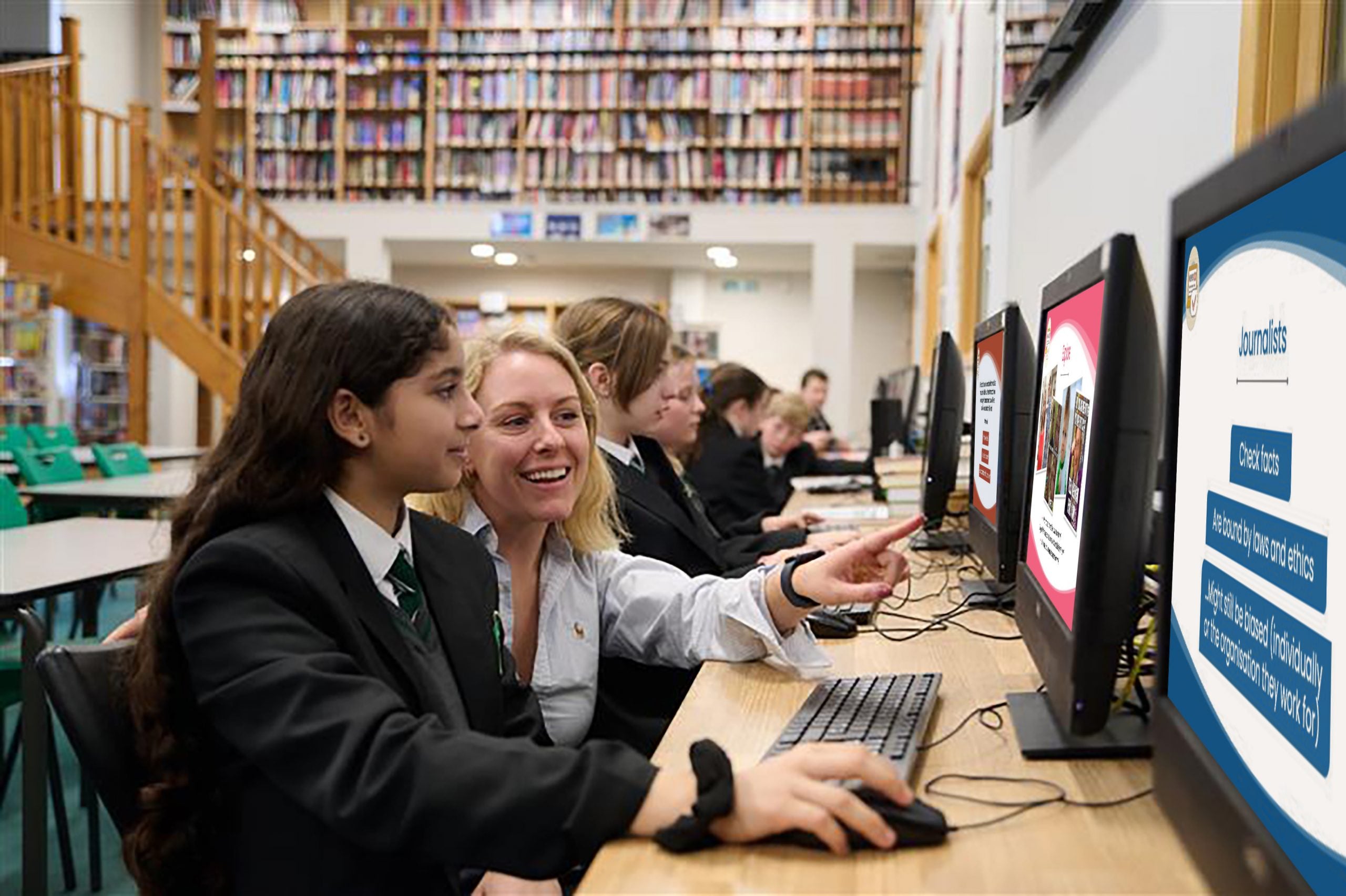
Over the past year, one message has come through loud and clear from teachers: media and information literacy can’t wait. With the pace of change in news, social media, and AI, pupils need the skills to navigate information long before they have a phone in their hands.
In a conversation today about an upcoming networking session, I was asked what practical steps primary and secondary teachers can take right now to build these skills – even without extra time, training, or resources.
Here are the three I keep returning to:
If the first time pupils hear you discuss the news is during a crisis, they’ll associate current affairs with anxiety. But when we weave news into everyday conversations – the surprising, the inspiring, the human – pupils learn that news is something to explore, question, and understand, not fear.
A five-minute chat once or twice a week builds confidence and curiosity over time.
Before children are officially on social media, they already need to understand the invisible systems shaping what they see online.
You don’t need tech to do this – you can model an algorithm in the classroom using objects, sorting, and simple rules. When pupils physically experience how content gets selected and amplified, the “mystery” disappears. What’s left is a clearer sense of agency.
Many children (and adults!) think AI is a super-smart search engine. But it isn’t “intelligent” – it’s a prediction machine, trained to guess the next word, image, or action. When pupils understand this, they become more discerning users of AI tools and less likely to assume that anything generated is automatically reliable.
AI is powerful and useful, yes – but it still needs critical thinkers behind the keyboard.
At First News, we’re helping schools develop these habits and skills systematically through our new media and information literacy (MIL) programme, designed for KS2 and KS3. But even without a full curriculum in place, every teacher can begin building these foundations today.
Small conversations. Simple models. Clear explanations.
That’s how we grow confident, informed young people ready to navigate – and shape – the information world around them.
First News reaches millions of young readers every week, at home and at school. Our age-appropriate news stories and activities spark curiosity, build media and information literacy skills and empower children with the tools to navigate the world.