Talking about money: a quick guide for parents & educators
Published: 18th February 2026
Updated: 11th March 2026
Published: 18th February 2026
Updated: 11th March 2026
First News have partnered with Monzo to support parents and educators in talking about money with kids. With practical examples, discussion prompts and simple explanations, the article helps young people build strong money habits.
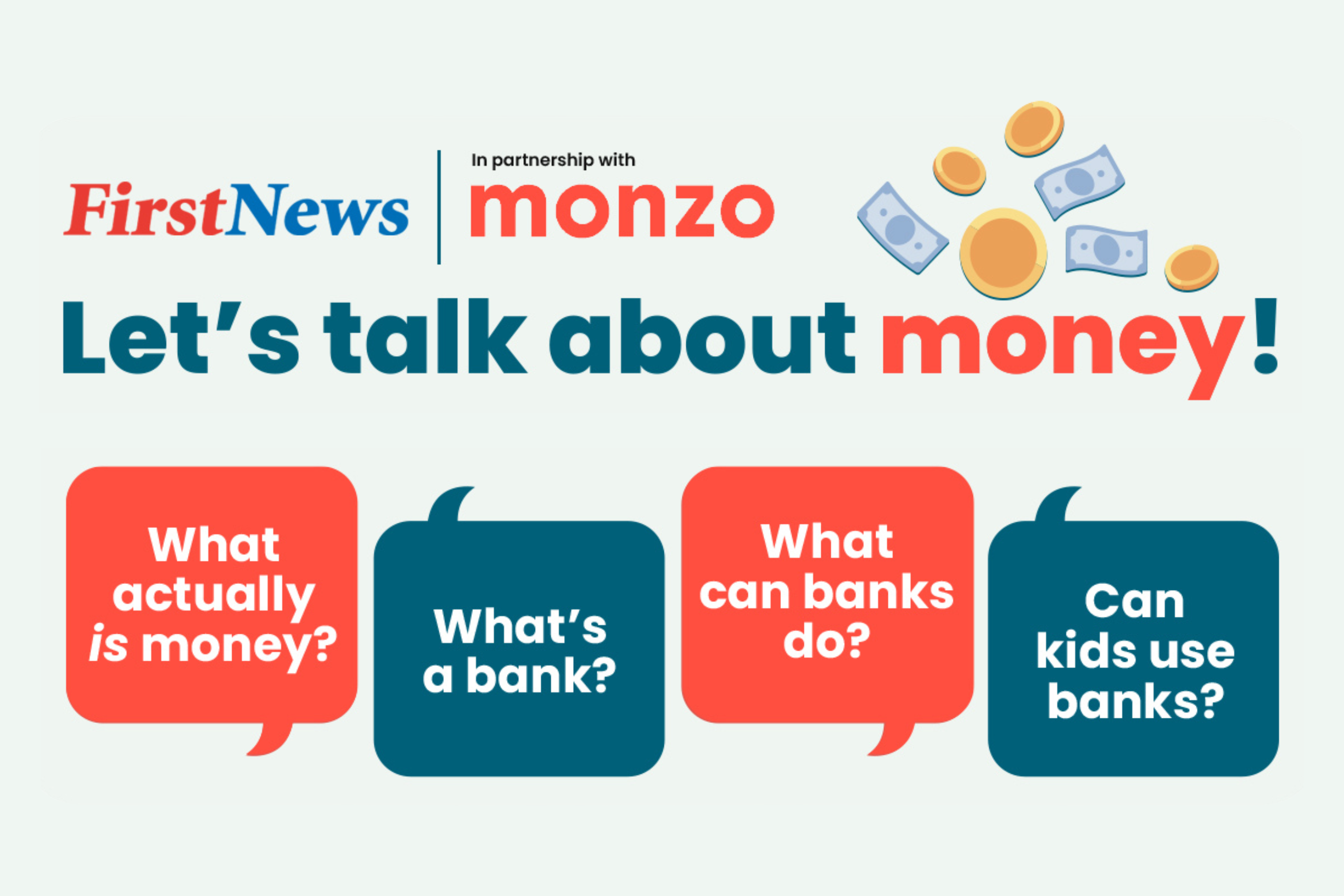
Money is something children notice long before anyone explains it – in shops, in plans with friends and in everyday choices adults make. What they often lack isn’t exposure, but context.
By the time they’re expected to understand money properly, many have already formed ideas about it: that it’s complicated, private, or something you’re either good or bad at. Confidence grows through familiarity; clear explanations and lessons help, and short everyday conversations help children connect what they’re learning to real life.
That’s why we’ve partnered with Monzo, to produce a series of newspaper explainers and supporting classroom resources. Together they give shared language for things children are already observing: saving, sharing, making choices and everyday money words. The aim isn’t financial expertise, it’s helping children feel comfortable asking questions and understanding why people make different decisions.
It’s crucial for children to learn that if they spend their money straight away, they won’t have any left. But we didn’t need to tell you that! The challenge is how we get that message across so it sticks.
It might help to explain how saving means they’ll have money ready for things like going bowling with friends or planning something special.
As children get older, saving also helps prepare them for less exciting situations. As adults, we often save for unexpected costs, like replacing something that’s broken. Having money set aside can make these moments feel easier to manage.
Children may ask how saving creates interest. One way to explain interest to children is by imagining a sticker chart. Each day money isn’t spent, another sticker is added. Over time, those stickers build up.
The rule is simple: the longer money stays in the bank, the more interest it can earn.

Ava wants a Jellycat keyring that costs £25. She doesn’t need it, but it’s extremely cute and she’s been eyeing it up for ages.
She already has £5 stashed in her piggy bank. That leaves £20 to go, so she keeps the £5 safe until she can add to it.
A couple of weeks later, it’s her birthday and she gets £15 from her grandparents. Her savings jump to £20, but she’s still £5 short. Ava asks her mum how she could earn the rest. Her mum suggests walking the dog.
By the end of the day, the dog is muddy, Ava is tired and the Jellycat fund is complete.
This is how saving works for most people. It happens bit by bit. By being patient and adding money over time, children learn that saving helps them buy things they can’t afford straight away.
Children tend to learn about money gradually through everyday life: spending their own money, watching how adults pay for things, and overhearing conversations about saving or bills.
At home, pocket money or paid chores can offer practical experience of budgeting and saving, but families approach this in different ways. It can also help to explain that income (wages or salary) first goes towards essentials, and that spending decisions often involve trade-offs.
As children grow, money starts to show up in friendships – splitting costs, lending small amounts, buying gifts or planning days out. Encouraging clear communication, paying back what’s owed, and being mindful that not everyone has the same financial situation can help avoid awkwardness or pressure.
Open, age-appropriate conversations can also help children feel more confident and thoughtful about money.

These challenges are designed to get children thinking and talking about money. There are no wrong answers.
Needs vs wants:
How do children decide what to buy first? Is there a way to spend some money now and save some for later?
The waiting game:
Would they take £5 today or £10 next week? Why does waiting feel difficult?
Future jobs:
What job would they like to do one day? What would they use their money for?
At the supermarket:
Would they choose a cheaper option if it meant saving money for something else?
Giving:
Who or what would they choose to help if they had money to give away?
Money language can be confusing for children. Here’s a brief guide to key terms you might explain at home:
Bank basics:
Bank, account, interest, debit card (spends your money), credit card (borrows money), ATM.
Everyday money:
Cash, currency, PIN, bills, inflation (prices rising over time).
Earning:
Earn, income/salary/wages, taxes.
Spending and saving:
Budget, bank balance, discount, needs vs wants, saving, goal, receipt/refund, donate.
As children grow, they may also hear words like loan, mortgage, investing and pension. Keeping explanations simple and linking them to real-life moments helps build understanding over time.
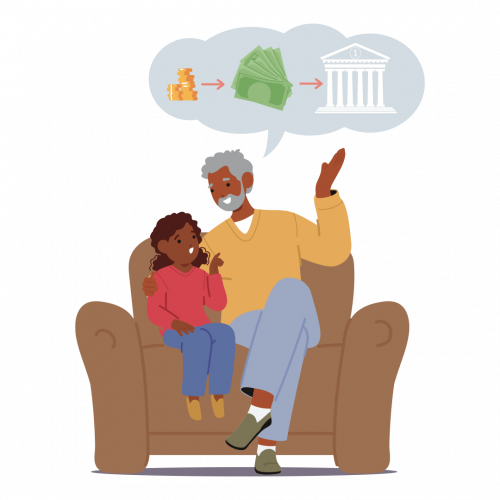
Money is often about making choices. Children can’t always have everything at once, but talking things through helps those choices feel easier.
The more families talk about money in everyday situations, the more confident children become.
We hope you enjoyed this short journey through the world of money. Now head over to the learning resources – made in collaboration with Monzo – to practice in class and at home.
Our primary, secondary, and assembly packs help kids understand the role of banks through interactive activities, and include a set of parent notes.
Plus, subscribe to First News to read more in our weekly newspaper!
First News reaches millions of young readers every week, at home and at school. Our age-appropriate news stories and activities spark curiosity, build media and information literacy skills and empower children with the tools to navigate the world.